CKS软件版 & CKS考試備考經驗
Wiki Article
順便提一下,可以從雲存儲中下載PDFExamDumps CKS考試題庫的完整版:https://drive.google.com/open?id=1sDZAqtdUbbx1Nn89GpKwovcunsdS0zBK
你是IT人士嗎?你想成功嗎?如果你想成功你就購買我們PDFExamDumps Linux Foundation的CKS考試認證培訓資料吧,我們的培訓資料是通過實踐檢驗了的,它可以幫助你順利通過IT認證,有了PDFExamDumps Linux Foundation的CKS考試認證培訓資料你在IT行業的將有更好的發展,可以享受高級白領的待遇,可以在國際上闖出一片天地,擁有高端的技術水準,你還在擔心什麼,PDFExamDumps Linux Foundation的CKS考試認證培訓資料將會滿足你這一欲望,我們與你同甘共苦,一起接受這挑戰。
CKS 考試旨在確保候選人具備Kubernetes安全性的必要知識和實踐經驗,以有效地保護Kubernetes環境。此認證設計給予管理Kubernetes集群和部署的個人參加,當中包括但不限於系統管理員、DevOps 工程師、安全專家和運營工程師。隨著Kubernetes在行業中越來越受歡迎,此認證允許專業人員區別自己,展示他們的知識,並在行業中獲得競爭優勢。
最新有效的CKS學習指南資料 - 提供免费的CKS試題下載
在IT行業迅速崛起的年代,我們不得不對那些IT人士刮目相看,他們利用他們高端的技術,為我們創造了許許多多的便捷之處,為國家企業節省了大量的人力物力,卻達到了超乎想像的效果,他們的收入不用說就知道,肯定是高,你想成為那樣的人嗎?或者羡慕嗎?或者你也是IT人士,卻沒收穫那樣的成果,不要擔心,我們PDFExamDumps Linux Foundation的CKS考試認證資料能幫助你得到你想要的,選擇了我們等於選擇了成功。
CKS考試是一個嚴格的評估,包括15-20個基於表現的任務,必須在兩個小時內完成。此考試在線上進行,需要考生有Kubernetes集群的訪問權限,以及命令行工具和Kubernetes API對象的知識。此認證有效期為兩年,可以通過通過重新認證考試或通過獲取持續教育學分來更新。
最新的 Kubernetes Security Specialist CKS 免費考試真題 (Q44-Q49):
問題 #44
Fix all issues via configuration and restart the affected components to ensure the new setting takes effect.
Fix all of the following violations that were found against the API server:- a. Ensure the --authorization-mode argument includes RBAC b. Ensure the --authorization-mode argument includes Node c. Ensure that the --profiling argument is set to false Fix all of the following violations that were found against the Kubelet:- a. Ensure the --anonymous-auth argument is set to false.
b. Ensure that the --authorization-mode argument is set to Webhook.
Fix all of the following violations that were found against the ETCD:-
a. Ensure that the --auto-tls argument is not set to true
Hint: Take the use of Tool Kube-Bench
答案:
解題說明:
API server:
Ensure the --authorization-mode argument includes RBAC
Turn on Role Based Access Control. Role Based Access Control (RBAC) allows fine-grained control over the operations that different entities can perform on different objects in the cluster. It is recommended to use the RBAC authorization mode.
Fix - Buildtime
Kubernetes
apiVersion: v1
kind: Pod
metadata:
creationTimestamp: null
labels:
component: kube-apiserver
tier: control-plane
name: kube-apiserver
namespace: kube-system
spec:
containers:
- command:
+ - kube-apiserver
+ - --authorization-mode=RBAC,Node
image: gcr.io/google_containers/kube-apiserver-amd64:v1.6.0
livenessProbe:
failureThreshold: 8
httpGet:
host: 127.0.0.1
path: /healthz
port: 6443
scheme: HTTPS
initialDelaySeconds: 15
timeoutSeconds: 15
name: kube-apiserver-should-pass
resources:
requests:
cpu: 250m
volumeMounts:
- mountPath: /etc/kubernetes/
name: k8s
readOnly: true
- mountPath: /etc/ssl/certs
name: certs
- mountPath: /etc/pki
name: pki
hostNetwork: true
volumes:
- hostPath:
path: /etc/kubernetes
name: k8s
- hostPath:
path: /etc/ssl/certs
name: certs
- hostPath:
path: /etc/pki
name: pki
Ensure the --authorization-mode argument includes Node
Remediation: Edit the API server pod specification file /etc/kubernetes/manifests/kube-apiserver.yaml on the master node and set the --authorization-mode parameter to a value that includes Node.
--authorization-mode=Node,RBAC
Audit:
/bin/ps -ef | grep kube-apiserver | grep -v grep
Expected result:
'Node,RBAC' has 'Node'
Ensure that the --profiling argument is set to false
Remediation: Edit the API server pod specification file /etc/kubernetes/manifests/kube-apiserver.yaml on the master node and set the below parameter.
--profiling=false
Audit:
/bin/ps -ef | grep kube-apiserver | grep -v grep
Expected result:
'false' is equal to 'false'
Fix all of the following violations that were found against the Kubelet:- Ensure the --anonymous-auth argument is set to false.
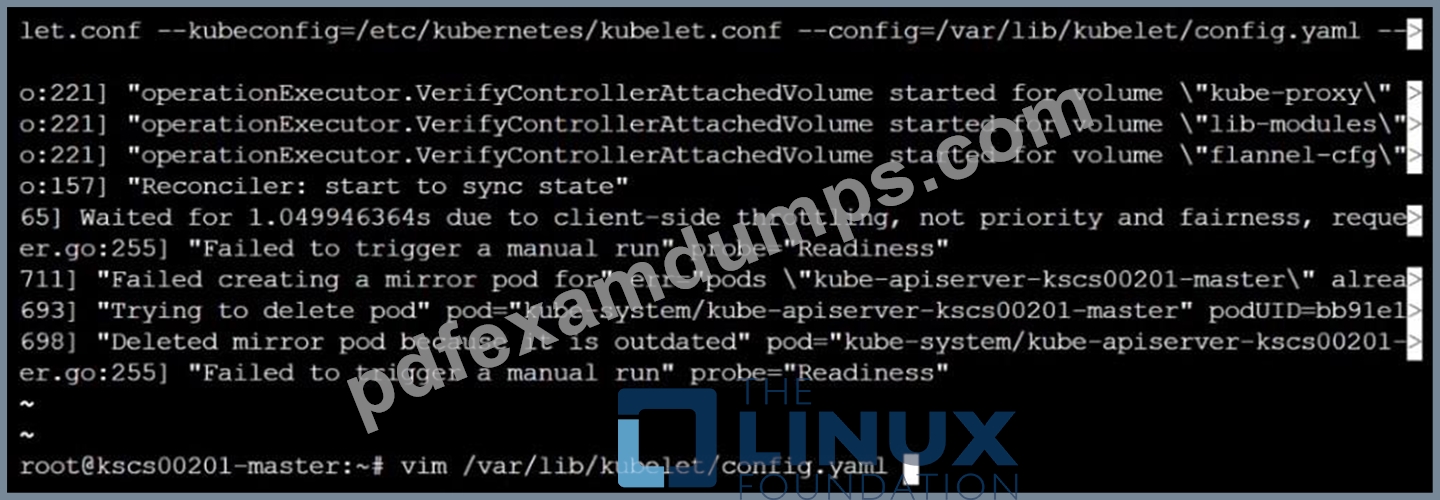
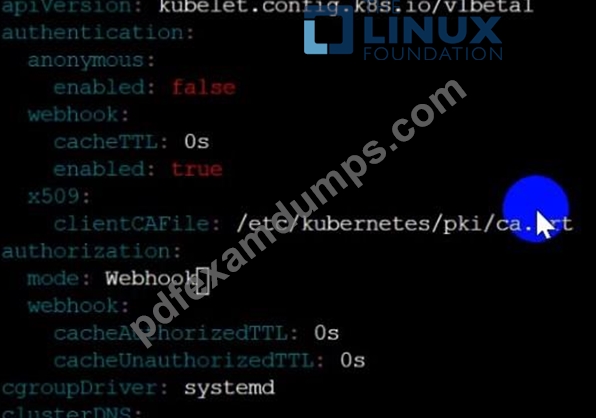
Remediation: If using a Kubelet config file, edit the file to set authentication: anonymous: enabled to false. If using executable arguments, edit the kubelet service file /etc/systemd/system/kubelet.service.d/10-kubeadm.conf on each worker node and set the below parameter in KUBELET_SYSTEM_PODS_ARGS variable.
--anonymous-auth=false
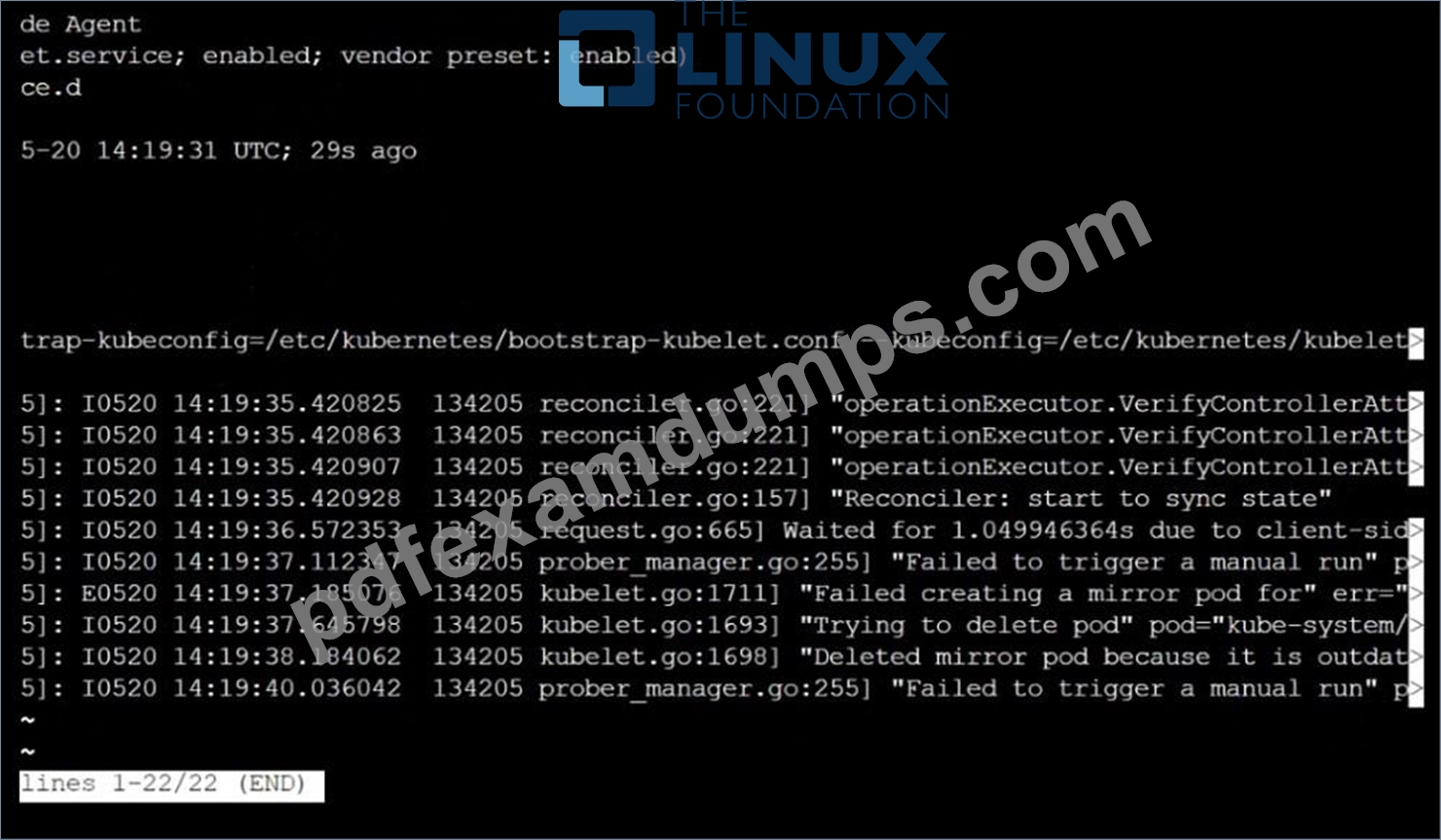
Based on your system, restart the kubelet service. For example:
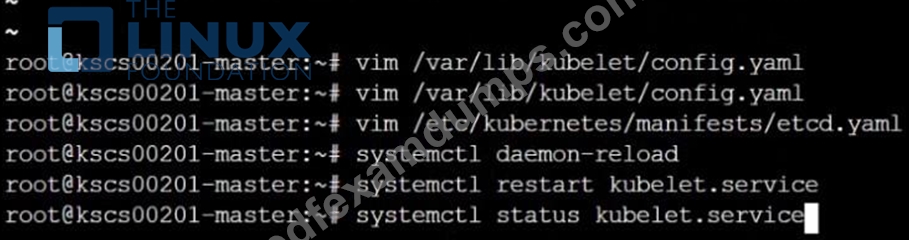
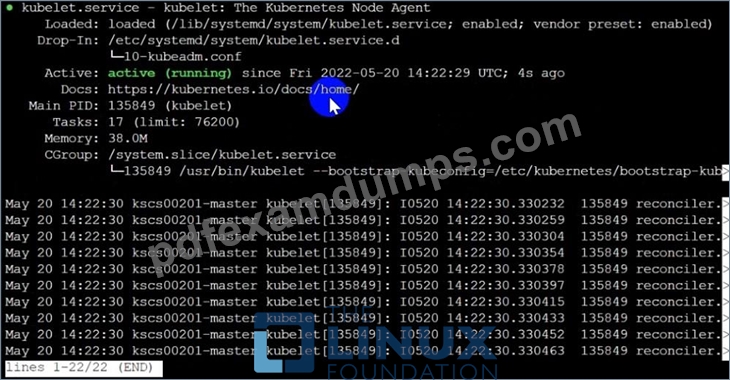
systemctl daemon-reload
systemctl restart kubelet.service
Audit:
/bin/ps -fC kubelet
Audit Config:
/bin/cat /var/lib/kubelet/config.yaml
Expected result:
'false' is equal to 'false'
2) Ensure that the --authorization-mode argument is set to Webhook.
Audit
docker inspect kubelet | jq -e '.[0].Args[] | match("--authorization-mode=Webhook").string' Returned Value: --authorization-mode=Webhook Fix all of the following violations that were found against the ETCD:- a. Ensure that the --auto-tls argument is not set to true Do not use self-signed certificates for TLS. etcd is a highly-available key value store used by Kubernetes deployments for persistent storage of all of its REST API objects. These objects are sensitive in nature and should not be available to unauthenticated clients. You should enable the client authentication via valid certificates to secure the access to the etcd service.
Fix - Buildtime
Kubernetes
apiVersion: v1
kind: Pod
metadata:
annotations:
scheduler.alpha.kubernetes.io/critical-pod: ""
creationTimestamp: null
labels:
component: etcd
tier: control-plane
name: etcd
namespace: kube-system
spec:
containers:
- command:
+ - etcd
+ - --auto-tls=true
image: k8s.gcr.io/etcd-amd64:3.2.18
imagePullPolicy: IfNotPresent
livenessProbe:
exec:
command:
- /bin/sh
- -ec
- ETCDCTL_API=3 etcdctl --endpoints=https://[192.168.22.9]:2379 --cacert=/etc/kubernetes/pki/etcd/ca.crt
--cert=/etc/kubernetes/pki/etcd/healthcheck-client.crt --key=/etc/kubernetes/pki/etcd/healthcheck-client.key get foo failureThreshold: 8 initialDelaySeconds: 15 timeoutSeconds: 15 name: etcd-should-fail resources: {} volumeMounts:
- mountPath: /var/lib/etcd
name: etcd-data
- mountPath: /etc/kubernetes/pki/etcd
name: etcd-certs
hostNetwork: true
priorityClassName: system-cluster-critical
volumes:
- hostPath:
path: /var/lib/etcd
type: DirectoryOrCreate
name: etcd-data
- hostPath:
path: /etc/kubernetes/pki/etcd
type: DirectoryOrCreate
name: etcd-certs
status: {}
Explanation: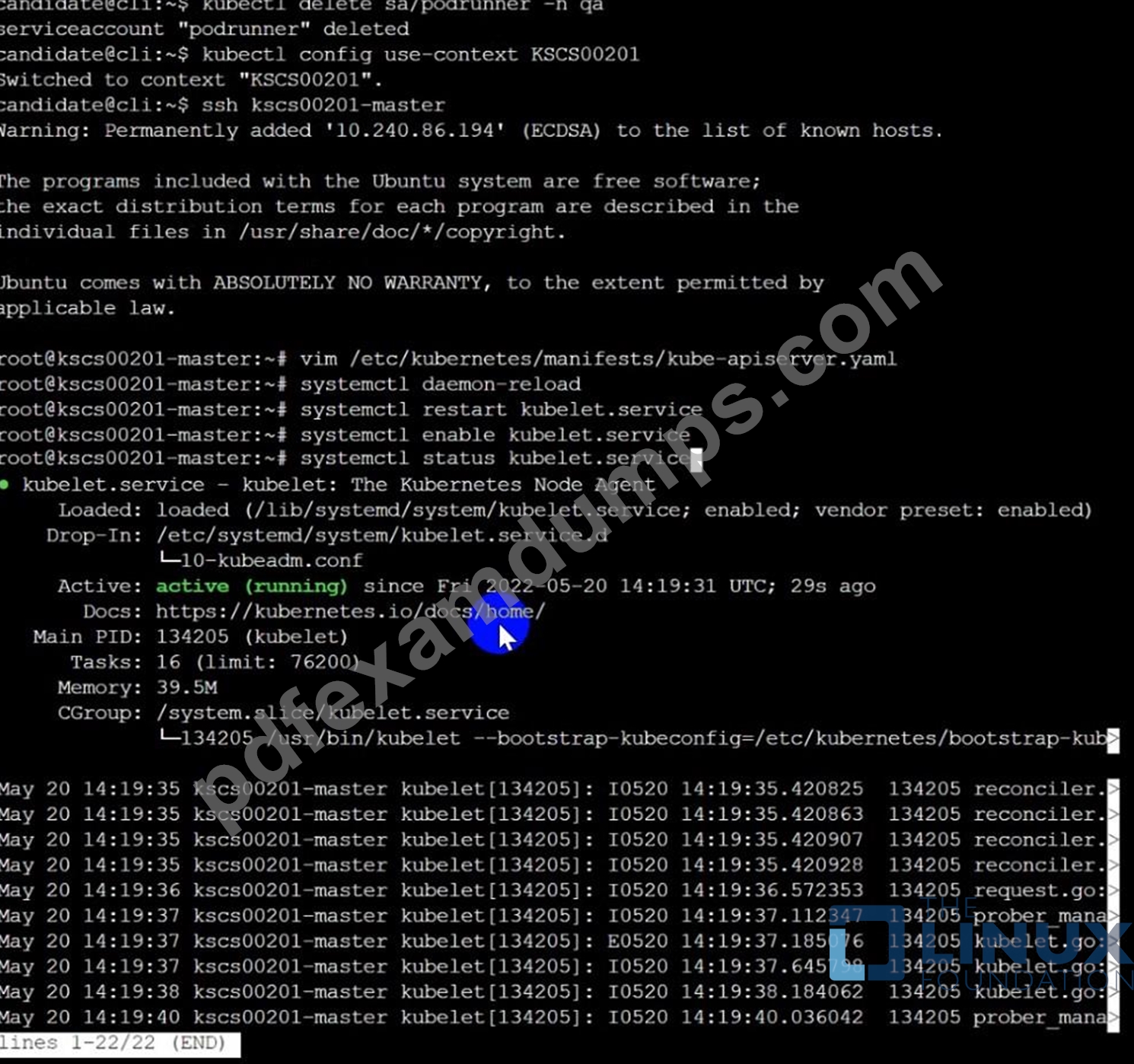

問題 #45
Enable audit logs in the cluster, To Do so, enable the log backend, and ensure that
1. logs are stored at /var/log/kubernetes-logs.txt.
2. Log files are retained for 12 days.
3. at maximum, a number of 8 old audit logs files are retained.
4. set the maximum size before getting rotated to 200MB
Edit and extend the basic policy to log:
1. namespaces changes at RequestResponse
2. Log the request body of secrets changes in the namespace kube-system.
3. Log all other resources in core and extensions at the Request level.
4. Log "pods/portforward", "services/proxy" at Metadata level.
5. Omit the Stage RequestReceived
All other requests at the Metadata level
答案:
解題說明:
Kubernetes auditing provides a security-relevant chronological set of records about a cluster. Kube-apiserver performs auditing. Each request on each stage of its execution generates an event, which is then pre-processed according to a certain policy and written to a backend. The policy determines what's recorded and the backends persist the records.
You might want to configure the audit log as part of compliance with the CIS (Center for Internet Security) Kubernetes Benchmark controls.
The audit log can be enabled by default using the following configuration in cluster.yml:
services:
kube-api:
audit_log:
enabled: true
When the audit log is enabled, you should be able to see the default values at /etc/kubernetes/audit-policy.yaml The log backend writes audit events to a file in JSONlines format. You can configure the log audit backend using the following kube-apiserver flags:
--audit-log-path specifies the log file path that log backend uses to write audit events. Not specifying this flag disables log backend. - means standard out
--audit-log-maxage defined the maximum number of days to retain old audit log files
--audit-log-maxbackup defines the maximum number of audit log files to retain
--audit-log-maxsize defines the maximum size in megabytes of the audit log file before it gets rotated If your cluster's control plane runs the kube-apiserver as a Pod, remember to mount the hostPath to the location of the policy file and log file, so that audit records are persisted. For example:
--audit-policy-file=/etc/kubernetes/audit-policy.yaml
--audit-log-path=/var/log/audit.log
問題 #46
SIMULATION
Documentation Namespace, NetworkPolicy, Pod
You must connect to the correct host . Failure to do so may result in a zero score.
[candidate@base] $ ssh cks000031
Context
You must implement NetworkPolicies controlling the traffic flow of existing Deployments across namespaces.
Task
First, create a NetworkPolicy named deny-policy in the prod namespace to block all ingress traffic.
The prod namespace is labeled env:prod
Next, create a NetworkPolicy named allow-from-prod in the data namespace to allow ingress traffic only from Pods in the prod namespace.
Use the label of the prod names & Click to copy traffic.
The data namespace is labeled env:data
Do not modify or delete any namespaces or Pods . Only create the required NetworkPolicies.
答案:
解題說明:
See the Explanation below for complete solution
Explanation:
1) Connect to the correct host
ssh cks000031
sudo -i
2) Use admin kubeconfig (safe default)
export KUBECONFIG=/etc/kubernetes/admin.conf
PART A - Deny ALL ingress traffic in prod namespace
Requirement:
NetworkPolicy name: deny-policy
Namespace: prod (namespace is labeled env=prod)
Effect: block all ingress
3) Create deny-policy in prod
Create the policy directly with kubectl (fastest & safest):
cat <<EOF | kubectl apply -f -
apiVersion: networking.k8s.io/v1
kind: NetworkPolicy
metadata:
name: deny-policy
namespace: prod
spec:
podSelector: {}
policyTypes:
- Ingress
EOF
✅ What this does:
podSelector: {} → selects all Pods in prod
No ingress: rules → deny all ingress traffic
4) Verify
kubectl -n prod get networkpolicy deny-policy
PART B - Allow ingress to data ONLY from Pods in prod
Requirement:
NetworkPolicy name: allow-from-prod
Namespace: data (namespace is labeled env=data)
Allow ingress only from Pods in prod namespace
Use namespace label (env=prod)
5) Create allow-from-prod policy in data
cat <<EOF | kubectl apply -f -
apiVersion: networking.k8s.io/v1
kind: NetworkPolicy
metadata:
name: allow-from-prod
namespace: data
spec:
podSelector: {}
policyTypes:
- Ingress
ingress:
- from:
- namespaceSelector:
matchLabels:
env: prod
EOF
✅ What this does:
Applies to all Pods in data
Allows ingress only from namespaces labeled env=prod
All other ingress traffic is denied by default
6) Verify
kubectl -n data get networkpolicy allow-from-prod
FINAL CHECK (What the examiner expects)
kubectl get networkpolicy -n prod
kubectl get networkpolicy -n data
You should see:
deny-policy in prod
allow-from-prod in data
問題 #47
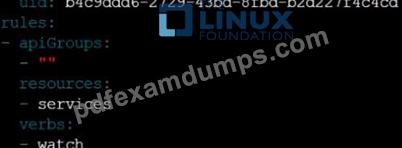
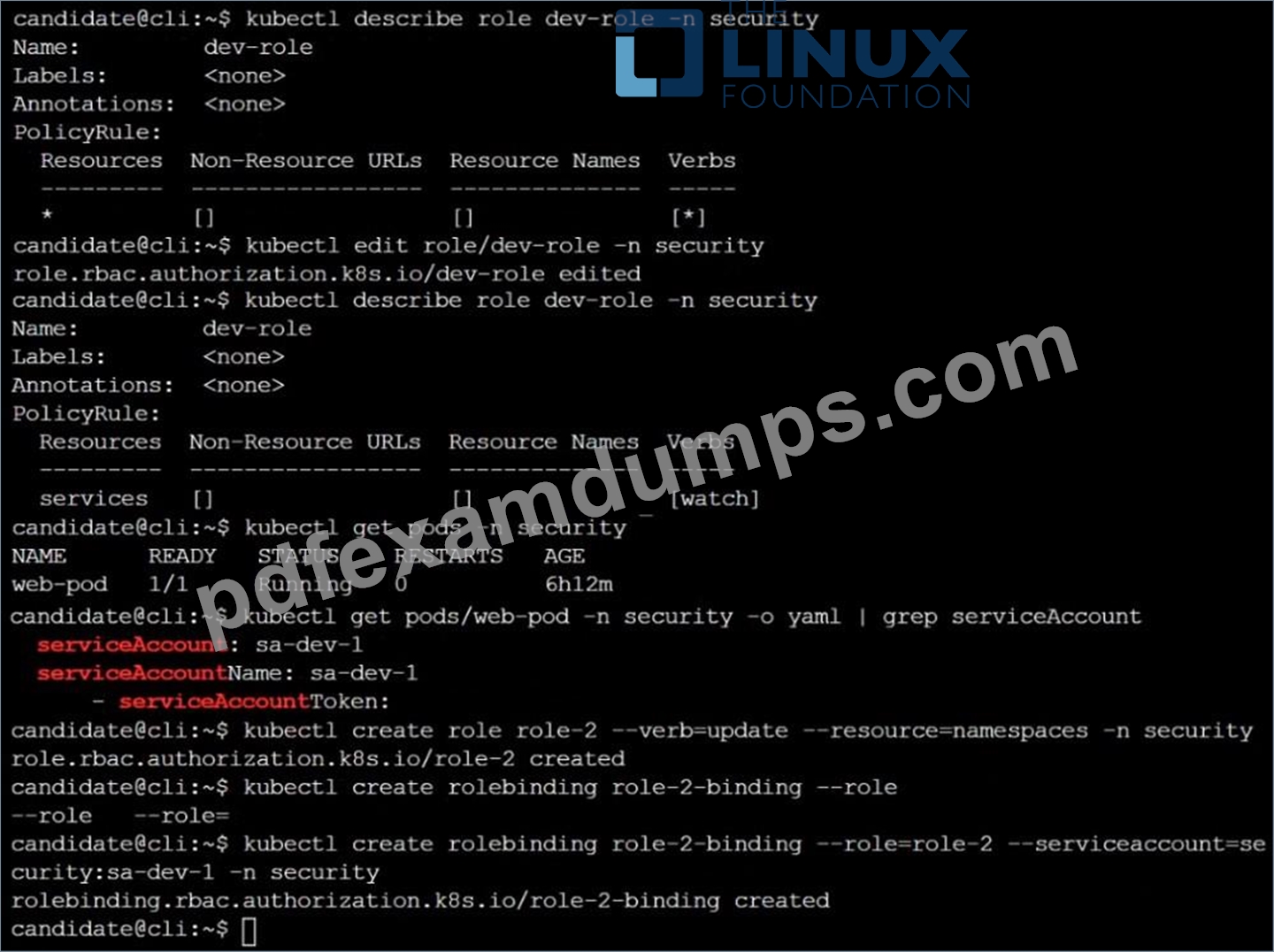
Given an existing Pod named nginx-pod running in the namespace test-system, fetch the service-account-name used and put the content in /candidate/KSC00124.txt Create a new Role named dev-test-role in the namespace test-system, which can perform update operations, on resources of type namespaces.
Create a new RoleBinding named dev-test-role-binding, which binds the newly created Role to the Pod's ServiceAccount ( found in the Nginx pod running in namespace test-system).
答案:
解題說明: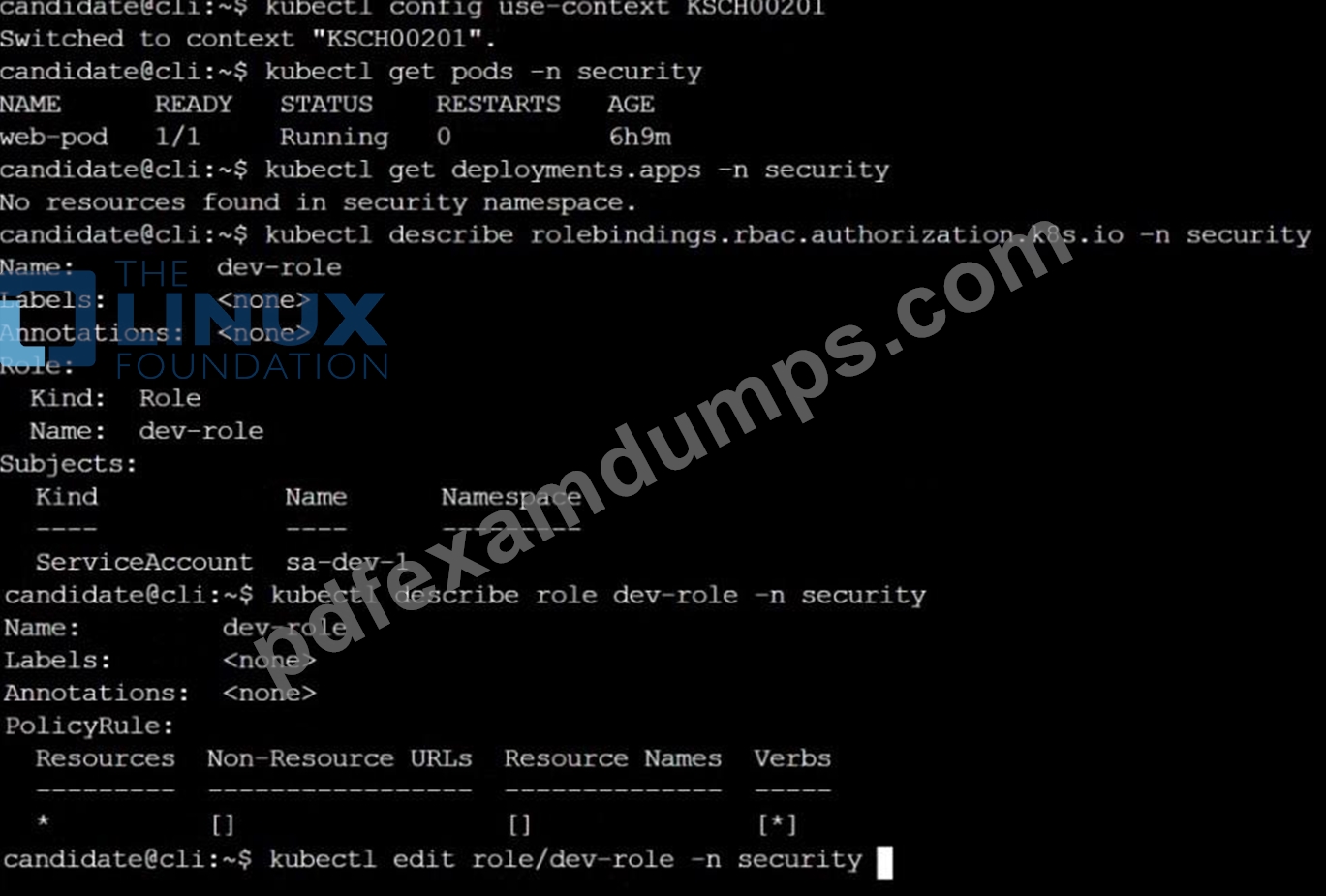
問題 #48
You have a deployment named 'database-deployment' running a PostgreSQL database container. You need to restrict access to the database from any other pods in the cluster except for a specific pod with the label Sapp:backend'.
答案:
解題說明:
Solution (Step by Step) :
1. Create a NetworkPolicy for the database deployment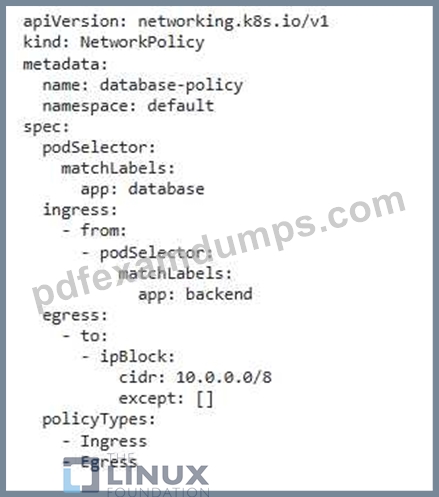
2. Apply the NetworkPolicy: bash kubectl apply -f database-policy-yaml - The 'database-policy' is applied to pods with the label 'app-.database' - The 'ingress' section allows traffic only from pods with the label 'app:backend' - All other ingress traffic is blocked. Important Notes: - Ensure that the 'backend' pod has the correct label - This policy restricts access to the database pod from any other pods, including within the same namespace. - You can customize this policy further to allow specific ports or protocols.
問題 #49
......
CKS考試備考經驗: https://www.pdfexamdumps.com/CKS_valid-copyright.html
- 完全覆蓋的CKS软件版和最新Linux Foundation認證培訓 - 授權的Linux Foundation Certified Kubernetes Security Specialist (CKS) ???? 打開網站【 tw.fast2test.com 】搜索【 CKS 】免費下載免費下載CKS考題
- 最有效的CKS软件版,真實還原Linux Foundation CKS考試內容 ???? 到「 www.newdumpspdf.com 」搜索“ CKS ”輕鬆取得免費下載CKS考古題分享
- CKS認證考試題庫 - 最新最有效的CKS考試學習資料 ???? 打開網站【 www.pdfexamdumps.com 】搜索➠ CKS ????免費下載CKS測試
- CKS認證考試題庫 - 最新最有效的CKS考試學習資料 ???? 來自網站「 www.newdumpspdf.com 」打開並搜索( CKS )免費下載免費下載CKS考題
- CKS證照考試 ???? CKS考古題介紹 ???? 最新CKS題庫資源 ???? ▶ www.testpdf.net ◀上的➽ CKS ????免費下載只需搜尋免費下載CKS考題
- 使用精心研發的Linux Foundation CKS软件版有效率地學習您的Linux Foundation CKS考試 ???? ☀ www.newdumpspdf.com ️☀️上搜索⏩ CKS ⏪輕鬆獲取免費下載CKS測試
- CKS PDF ???? CKS考古題介紹 ⛺ CKS考試備考經驗 ???? 立即打開“ tw.fast2test.com ”並搜索➡ CKS ️⬅️以獲取免費下載CKS考古題更新
- 完全覆蓋的CKS软件版和最新Linux Foundation認證培訓 - 授權的Linux Foundation Certified Kubernetes Security Specialist (CKS) ???? 來自網站⏩ www.newdumpspdf.com ⏪打開並搜索➡ CKS ️⬅️免費下載CKS證照資訊
- 快速下載的CKS软件版,最有效的考試題庫幫助妳輕松通過CKS考試 ‼ 透過➠ tw.fast2test.com ????輕鬆獲取☀ CKS ️☀️免費下載CKS測試
- 快速下載的CKS软件版,最有效的考試題庫幫助妳輕松通過CKS考試 ???? ➥ www.newdumpspdf.com ????是獲取➥ CKS ????免費下載的最佳網站CKS PDF
- 完全覆蓋的CKS软件版和最新Linux Foundation認證培訓 - 授權的Linux Foundation Certified Kubernetes Security Specialist (CKS) ???? 在⇛ www.vcesoft.com ⇚上搜索⮆ CKS ⮄並獲取免費下載CKS PDF題庫
- www.stes.tyc.edu.tw, laylauwxe213731.blogdal.com, sb-bookmarking.com, www.stes.tyc.edu.tw, emiliasnid293335.dailyblogzz.com, lilliqdpr706868.westexwiki.com, 45listing.com, geraldsoci371660.theideasblog.com, www.atalphatrader.com, reganiixf668550.blogunteer.com, Disposable vapes
2026 PDFExamDumps最新的CKS PDF版考試題庫和CKS考試問題和答案免費分享:https://drive.google.com/open?id=1sDZAqtdUbbx1Nn89GpKwovcunsdS0zBK
Report this wiki page